India’s logistics and eCommerce ecosystem operates at an enormous scale, connecting millions of customers, businesses, warehouses, and delivery networks across diverse geographical regions. However, every year, the monsoon season introduces significant operational challenges that test the resilience of supply chains. Heavy rainfall, flooding, transportation delays, road closures, and regional disruptions can impact delivery timelines while increasing customer expectations for real-time updates and reliable support.
For logistics companies, retailers, eCommerce platforms, and last-mile delivery providers, maintaining service continuity during the monsoon season requires more than efficient transportation networks. It requires customer support operations capable of managing uncertainty, communicating proactively, and resolving delivery-related issues quickly.
This is why monsoon logistics support has become an essential component of modern supply chain management. By combining intelligent technology, predictive planning, skilled customer support teams, and proactive communication strategies, businesses can minimize disruption while maintaining customer trust during one of India’s most challenging operational periods.
How Monsoon Season Challenges India’s Logistics Networks
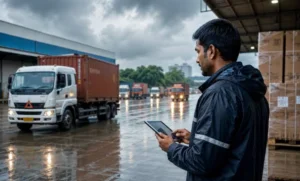
India’s monsoon season affects logistics operations across urban and rural areas in different ways. While major cities may experience waterlogging and traffic congestion, rural regions often face road accessibility issues due to flooding or infrastructure limitations. These disruptions can impact transportation routes, warehouse operations, delivery schedules, and inventory movement.
For businesses operating across multiple states, even localized weather events can create widespread supply chain challenges. A delayed shipment in one region can affect inventory availability, customer orders, and downstream delivery commitments.
During these periods, customers become increasingly dependent on accurate information. They want to know where their orders are located, when deliveries will arrive, and what alternatives are available if delays occur. This makes customer communication a critical part of logistics resilience.
The Growing Importance of Monsoon Logistics Support
Traditional logistics operations often focus primarily on transportation efficiency and delivery performance. However, during periods of disruption, customer experience becomes equally important. Even when delays cannot be completely avoided, businesses can protect customer relationships through transparent communication and timely assistance.
Effective monsoon logistics support enables organizations to manage increased customer interactions related to delayed deliveries, rescheduling requests, order tracking, cancellations, refunds, and delivery exceptions.
Support teams equipped with real-time logistics visibility can provide accurate updates instead of generic responses. This reduces customer frustration while helping businesses maintain trust during unexpected situations.
See also: Online Local Business Marketing Tips to Boost Local Sales
Proactive Communication Reduces Delivery Frustration
One of the biggest challenges during monsoon disruptions is the gap between operational reality and customer expectations. Customers may not always understand why deliveries are delayed due to weather conditions, transportation restrictions, or safety concerns.
Modern logistics operations are increasingly adopting proactive communication strategies to bridge this gap. Instead of waiting for customers to contact support, businesses can provide updates about potential delays, revised delivery timelines, and alternative solutions.
Automated notifications, real-time tracking updates, and intelligent customer engagement platforms help ensure customers remain informed throughout the delivery journey.
This approach transforms customer support from a reactive function into a proactive service experience.
Improving Delivery Disruption Customer Service
Weather-related disruptions often generate a significant increase in customer inquiries. Customers may contact support regarding delayed shipments, missed delivery windows, unavailable products, or changes in delivery locations.
Strong delivery disruption customer service requires more than answering customer questions. Support teams need access to accurate shipment data, transportation updates, warehouse information, and delivery partner status to provide meaningful resolutions.
Integrated customer experience platforms enable support professionals to quickly understand each situation and provide personalized assistance. Whether a delivery needs to be rescheduled, redirected, or escalated, faster access to information helps reduce resolution times.
During monsoon season, efficient communication can significantly influence customer satisfaction even when delays are unavoidable.
Technology Is Strengthening Supply Chain CX
Technology has become a critical factor in building resilient logistics operations. Artificial intelligence, predictive analytics, automation, and real-time monitoring systems help businesses anticipate disruptions and respond more effectively.
Predictive analytics can identify potential delays based on weather conditions, historical patterns, traffic conditions, and regional risks. These insights allow logistics teams to adjust routes, optimize resources, and communicate proactively with customers.
AI-powered customer support tools can handle routine inquiries such as order tracking and delivery updates while assisting human agents with complex issues. This combination improves efficiency while ensuring customers receive timely support during high-pressure situations.
Building Stronger Supply Chain CX During Disruptions
Customer experience in logistics extends beyond successful deliveries. It also depends on how effectively businesses manage challenges when things do not go according to plan.
Strong supply chain CX strategies focus on transparency, responsiveness, and customer confidence. Businesses that communicate clearly during delays are more likely to maintain customer loyalty compared to those that provide limited information.
During monsoon disruptions, customers value honesty and visibility. Providing realistic delivery expectations, explaining delays, and offering convenient resolution options helps create stronger relationships even during difficult circumstances.
The Role of Scalable Support Operations
Monsoon-related challenges are unpredictable. Some regions may experience normal operations while others face significant disruption. Logistics companies therefore require flexible support models that can quickly adapt to changing demand.
Scalable customer experience operations allow businesses to increase support capacity during periods of increased inquiries without affecting service quality. Workforce planning, multilingual support capabilities, automation, and omnichannel communication enable organizations to manage seasonal challenges effectively.
This flexibility is especially important for eCommerce companies, retail brands, logistics providers, and marketplaces that manage large customer volumes during monsoon months.
Preparing for the Future of Weather-Resilient Logistics
Climate patterns are becoming increasingly unpredictable, making operational resilience more important than ever. Logistics companies must prepare for disruptions through stronger technology adoption, improved communication strategies, and customer-focused support models.
Future-ready logistics operations will combine AI-powered forecasting, automated customer engagement, real-time visibility platforms, and flexible workforce models to manage challenges more effectively.
Organizations that invest in resilient support operations will not only reduce disruption impact but also create better customer experiences during uncertain conditions.
Supporting Resilient Logistics Experiences with TP India
As logistics networks become more complex and customer expectations continue rising, businesses need reliable customer experience partners capable of managing large-scale operations during challenging periods. TP India helps logistics companies, eCommerce platforms, retailers, and supply chain organizations deliver seamless customer support through AI-powered solutions, omnichannel engagement, and scalable operations.
With expertise in order management, delivery support, customer communication, issue resolution, and back-office processes, TP India enables organizations to manage increased customer interactions during seasonal disruptions. By combining advanced analytics, automation, multilingual support, and experienced customer service teams, TP India helps businesses strengthen supply chain resilience and maintain customer satisfaction even during challenging monsoon conditions.
Conclusion
Monsoon season presents significant challenges for India’s logistics ecosystem, but businesses that prepare with resilient customer support strategies can minimize disruption and maintain customer trust. Effective monsoon logistics support combines technology, proactive communication, and scalable operations to ensure customers remain informed and supported throughout the delivery journey.
By strengthening delivery disruption customer service and investing in advanced supply chain CX strategies, logistics companies can transform seasonal challenges into opportunities to build stronger customer relationships and deliver more reliable experiences across India.
FAQs
Why does monsoon season impact logistics operations?
Heavy rainfall, flooding, transportation delays, road closures, and regional disruptions can affect delivery routes, warehouse operations, and supply chain movement.
How does delivery disruption customer service help during monsoon?
It provides customers with timely updates, accurate shipment information, rescheduling options, and faster issue resolution when deliveries are affected by weather conditions.
What is supply chain CX?
Supply chain CX focuses on improving customer experiences throughout the logistics journey by combining visibility, communication, technology, and responsive support operations.
How does technology improve monsoon logistics management?
AI, predictive analytics, automation, and real-time tracking help businesses identify risks, optimize operations, and provide proactive customer communication.
Why is proactive communication important during delivery delays?
Customers are more satisfied when they receive transparent updates about delays instead of having to contact support repeatedly for information.
How can businesses scale customer support during monsoon disruptions?
Businesses can use flexible staffing models, automation, multilingual support, and omnichannel customer service platforms to handle increased inquiry volumes.