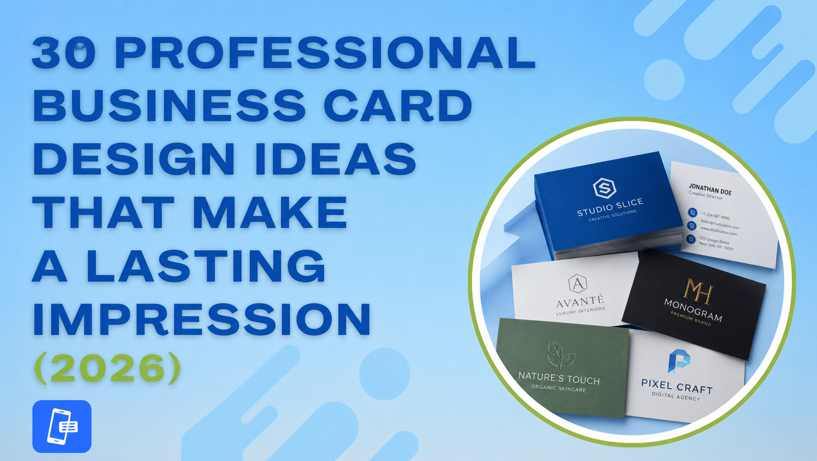
Despite the growth of digital networking, business cards continue to play an important role in building professional relationships. Whether you’re attending conferences, meeting potential clients, or introducing your brand at networking events, a thoughtfully designed business card helps people remember who you are.
Today’s customers expect more than a simple name and phone number printed on paper. They appreciate clean layouts, attractive color palettes, consistent branding, and modern features like QR codes that connect directly to your website or portfolio.
If you’re searching for professional business card design ideas, this guide shares practical inspiration, current design trends, and actionable tips to help you create a business card that reflects your brand and leaves a lasting impression.
Why Business Cards Still Matter in 2026
Business cards remain valuable because they create a personal connection that digital exchanges often cannot replace. They also reinforce brand identity, make contact information easy to share, and provide a professional touch during meetings.
A well-designed card can:
- Build credibility
- Increase brand recognition
- Encourage follow-up conversations
- Improve networking opportunities
- Support both offline and online marketing through QR codes
30 Professional Business Card Design Ideas
1. Minimalist Layout
Keep the design clean with generous white space, simple typography, and only the most important information.
2. Add a QR Code
Include a QR code that directs visitors to your website, portfolio, or digital contact card for quick access.
3. Choose Premium Paper
High-quality cardstock instantly creates a more professional feel and improves durability.
4. Use Consistent Brand Colors
Match your business card with your logo, website, and marketing materials to strengthen brand recognition.
5. Highlight Your Logo
Place your logo where it naturally attracts attention without overpowering the design.
6. Focus on Typography
Choose readable fonts with clear hierarchy for names, titles, and contact information.
7. Rounded Corners
Rounded edges give your card a modern and refined appearance.
8. Vertical Business Cards
A portrait layout helps your card stand out from traditional horizontal designs.
9. Double-Sided Design
Use the back to showcase services, a slogan, or a QR code while keeping the front uncluttered.
10. Matte Finish
A matte coating creates an elegant, premium look and reduces glare.
11. Spot UV Elements
Highlight your logo or brand name with glossy accents against a matte background.
12. Soft Color Gradients
Subtle gradients add depth without distracting from the content.
13. Bold Accent Colors
Use one vibrant accent color to draw attention to key details.
14. Creative Negative Space
Thoughtful use of empty space improves readability and gives the design a premium feel.
15. Industry-Specific Icons
Simple icons can quickly communicate your profession while maintaining a clean layout.
16. NFC Smart Cards
Enable instant contact sharing by integrating NFC technology alongside traditional printed details.
17. Modern Geometric Shapes
Simple geometric patterns create visual interest without overwhelming the design.
18. Elegant Monograms
A custom monogram works especially well for consultants, lawyers, and creative professionals.
19. Photo Business Cards
Professionals who rely on personal branding can include a high-quality portrait for easier recognition.
20. Textured Finishes
Embossing or debossing adds a tactile element that makes your card memorable.
21. Dark Background Design
A black or charcoal background paired with contrasting typography creates a sophisticated look.
22. Metallic Foil Details
Gold, silver, or copper foil can highlight your logo or company name for a premium finish.
23. Eco-Friendly Materials
Recycled paper demonstrates environmental responsibility while maintaining professional quality.
24. Personalized Tagline
A short tagline communicates your value proposition in just a few words.
25. Large Contact Information
Prioritize readability by making your phone number, email, or website easy to find.
26. Clean Visual Hierarchy
Guide readers naturally from your name to your title and contact details using font sizes and spacing.
27. Branded Background Patterns
Subtle patterns inspired by your logo help reinforce brand identity.
28. Localized Design Elements
Incorporating regional or cultural influences can help local businesses connect with their audience.
29. Digital-First Design
Design your printed card to complement your online presence, ensuring consistency across platforms.
30. Keep It Simple
Sometimes the best professional business card design ideas are the simplest. Avoid clutter and focus on clarity, consistency, and quality.
Business Card Design Trends in 2026
Current trends emphasize usability and professionalism rather than excessive decoration. Businesses are adopting minimalist layouts, premium textures, sustainable materials, digital contact sharing, accessible typography, and consistent branding. These trends help create cards that are visually appealing while remaining practical for everyday networking.
Common Mistakes to Avoid
- Using too many fonts
- Overcrowding the layout
- Choosing low-contrast colors
- Including unnecessary information
- Ignoring white space
- Using low-resolution logos
- Forgetting to test QR codes before printing
Quick Checklist Before Printing
✔ Logo is high resolution
✔ Contact information is accurate
✔ Typography is easy to read
✔ QR code works correctly
✔ Colors match your brand
✔ Layout looks balanced
✔ Margins are print-safe
✔ Paper quality matches your brand image
See also: How Technology Is Transforming Manufacturing
Frequently Asked Questions
What should a professional business card include?
Include your name, job title, company, phone number, email address, website, and logo. If relevant, add a QR code for quick access to your digital profile.
Are business cards still useful in 2026?
Yes. They remain one of the most effective networking tools because they create a tangible connection and reinforce your brand identity.
What is the best size for a business card?
The standard size is 3.5 × 2 inches (89 × 51 mm), though slight variations exist in different regions.
Should I use both sides of my business card?
Yes, if it improves readability. Use the back for additional branding, a QR code, or a short list of services.
What makes a business card memorable?
A memorable card combines quality materials, thoughtful typography, balanced spacing, consistent branding, and a clean layout rather than excessive decoration.
Final Thoughts
Creating an effective business card is about more than attractive visuals. The best designs communicate professionalism, strengthen brand identity, and make it easy for people to remember and contact you. By applying these professional business card design ideas thoughtfully and focusing on clarity instead of complexity, you can create a business card that supports meaningful networking and leaves a lasting impression in 2026.
Suggested Internal Links:
- Business Card Design by Industry: The Complete Guide
- Best Business Card Designs in 2026
- Free Business Card Templates for Every Profession
Suggested External References:
- Google Search Central (Helpful Content guidance)
- Adobe Design Blog (Typography and branding best practices)
- Pantone (Color inspiration and trends)