Healthcare has always had a strange relationship with technology. The field jumps on some innovations fast and drags its feet on others, often for reasons that have less to do with the technology itself and more to do with workflow, regulation, reimbursement, and culture. The result is an industry that runs MRI machines and electronic health records right alongside fax machines and paper requisitions.
The good news is that meaningful technology adoption is picking up speed. The tougher question is how to do it well. Throwing new tools at clinical and operational problems doesn’t automatically make things better, and plenty of healthcare technology projects fail not because the tech is bad but because the organization never thought hard about how to bring it in.
Here’s a look at the technologies reshaping healthcare and what it actually takes to get value out of them.
Artificial Intelligence in Clinical Decision Support
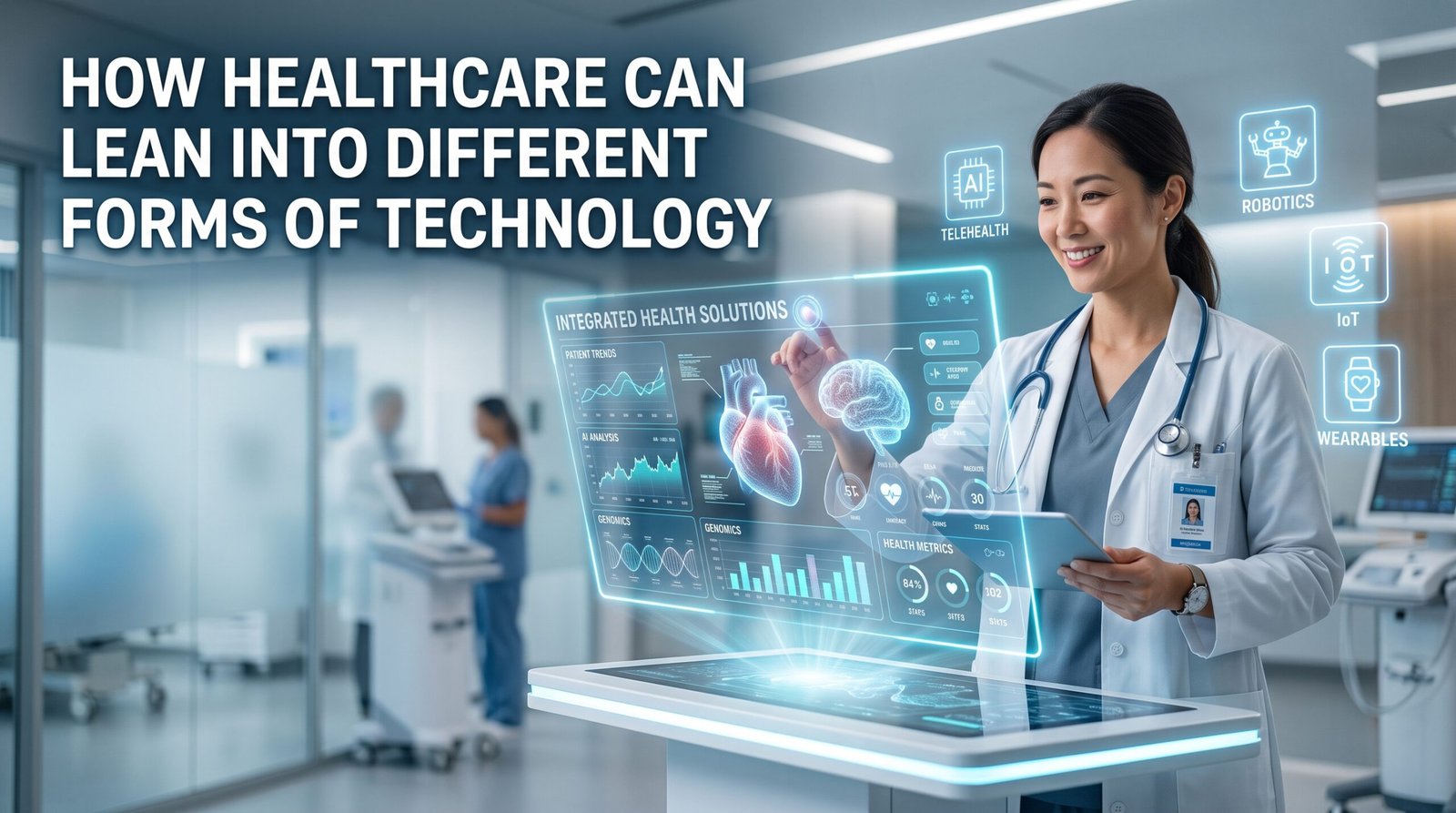
AI gets the most attention these days, and for good reason. Algorithms trained on huge datasets can catch patterns humans miss, flag cases that need urgent attention, and surface insights that would take hours of chart review to dig up by hand. In radiology, AI tools help spot nodules, fractures, and bleeds. In pathology, they help with grading tumors and counting mitoses. In primary care, they help spot patients at risk for sepsis or heart failure before symptoms get obvious.
The tech works best as a second set of eyes, not a stand-in for clinical judgment. A radiologist using AI to prioritize the worklist still reads every study. A pathologist using AI for tumor grading still signs out the case. The value isn’t in handing decisions to the algorithm, it’s in giving clinicians better information to work with.
Getting AI right takes careful thought about how it fits the workflow. A tool that produces great results but makes the clinician log into a separate system, upload data by hand, and wait twenty minutes for an answer isn’t going to get used. The AI tools that succeed are the ones tucked into the systems clinicians already work in, surfacing what they need at the moment they need it.
Telehealth and Remote Care
The pandemic pushed telehealth adoption forward by years, and most of those gains have stuck. Patients who used to drive an hour for a fifteen-minute follow-up now do the visit from their kitchen. Specialists in big medical centers see patients in rural areas they could never have reached before. Mental health providers in particular have built sustainable practices around video visits that work better for many patients than in-person ones did.
The tech itself is simple. The harder pieces are workflow, licensing, and reimbursement. Telehealth visits have to be scheduled, documented, and billed differently than in-person ones. Providers practicing across state lines have to navigate licensing rules. Payers have moved in different directions on what they’ll cover and at what rate.
Healthcare organizations leaning into telehealth need to treat it as a real service line, not a side project. That means putting money into the platforms, training the staff, building the workflows, and tracking outcomes the same way you would for any other clinical service. Done right, telehealth expands access, cuts no-show rates, and frees up in-person capacity for the visits that really need it.
Remote Patient Monitoring
One step past telehealth, remote patient monitoring uses connected devices to track patients between visits. Blood pressure cuffs that send readings to the care team. Glucose monitors that flag dangerous trends in real time. Wearables that catch atrial fibrillation episodes the patient never noticed. Pulse oximeters that watch over patients recovering from respiratory illness at home instead of a hospital bed.
The technology has matured to the point where the devices are reliable and the data infrastructure can handle the volume. The challenge is making sense of the information without drowning the care team in alerts. A patient with a connected glucose monitor produces hundreds of data points a day. Without good filtering and prioritization, all that data just turns into noise.
Programs that get real value out of remote monitoring build clear protocols for what data gets reviewed, what triggers action, and who’s on the hook for responding to alerts. They also pay attention to the patient experience, because devices that are hard to use or that feel intrusive get tossed in a drawer. The organizations winning at remote monitoring treat it as a clinical program backed by technology, not a tech rollout with clinical implications.
Electronic Health Records and Interoperability
EHRs have had a rough run in healthcare. Federal incentives drove fast adoption, but many clinicians experience their EHR as a source of frustration instead of a tool that helps them care for patients. Documentation load, click-heavy workflows, and clunky interfaces have all fed the burnout problem across the field.
The next chapter is about making EHRs work better, not replacing them. Some of that is happening through better integration with other systems, so clinicians aren’t toggling between five applications to see a full picture of a patient. Some is happening through ambient documentation tools that use AI to draft notes from the visit conversation, freeing clinicians from typing while they’re trying to listen. Some is happening through interoperability standards like FHIR that make it easier to move data between systems and vendors.
Healthcare organizations getting more out of their EHRs are putting effort into optimization, not just maintenance. They’re building dashboards that show clinicians what they actually need. They’re cleaning up order sets and documentation templates. They’re treating the EHR as a platform that can be improved instead of a static system to put up with.
Digital Pathology and Imaging
Pathology is going through its own digital shift. Whole slide imaging, where glass slides get scanned into high-resolution digital images, is becoming standard in many labs. Once cases are digital, they can be reviewed remotely, shared with consultants in minutes instead of days, and analyzed by AI tools that work on the images directly.
The same shift is happening in radiology, where most workflows have been digital for years, and in cardiology, dermatology, and other image-heavy specialties. The wins include faster turnaround, easier collaboration, better archival and retrieval, and a foundation for AI-assisted analysis that pure glass workflows can’t support.
The investment to go digital is real. Scanners are pricey, storage needs grow fast, and the IT setup has to keep up with very large image files. The organizations succeeding here are taking it in phases, starting with high-volume or high-value case types and expanding as they build experience and prove out value.
Cloud Computing and SaaS Platforms
Underneath much of the healthcare technology shift is a move from on-premise software to cloud-based platforms delivered as a service. EHRs, laboratory information systems, billing platforms, scheduling tools, and clinical decision support systems are all increasingly offered through the cloud instead of installed on local servers.
The upside is lower upfront cost, easier updates, better accessibility, and stronger underlying security through the major cloud providers. The tradeoffs include relying on internet uptime, needing to trust the vendor with sensitive data, and the importance of clear contract terms around data ownership and exit.
Healthcare organizations sizing up cloud platforms need to think past the price tag. The right vendor takes security and compliance seriously, backs strong service level commitments, and treats the relationship as a partnership. The wrong vendor cuts corners on security, hides behind support tiers, and turns into a problem you can’t easily walk away from.
Patient-Facing Technology
Technology aimed at patients has lagged behind technology aimed at providers, but the gap is closing. Patient portals are getting better. Scheduling tools let patients book without calling. Symptom checkers help patients figure out where to go for care. Prescription refill apps kill the phone trees and faxes. Communication platforms let patients message their care team without scheduling a visit.
Done well, patient-facing tech improves access, cuts administrative load on both sides, and gives patients a sense of agency in their care. Done poorly, it creates new sources of friction, fills clinical inboxes with messages, and locks out patients who don’t have the tech or the skills to use it.
The organizations leaning into patient-facing technology are thinking hard about equity, accessibility, and how the tools fit their care model. They’re not assuming every patient wants to handle everything through an app, and they’re building backup paths for patients who need different options.
The Common Thread
What separates successful healthcare technology adoption from failed projects isn’t usually the technology itself. It’s how the organization handles the change.
Good adoptions start with a clear read on the problem the technology is supposed to solve. They bring in the clinicians and staff who’ll use the tools when it’s time to pick and configure them. They invest in training, change management, and ongoing tuning instead of treating go-live as the finish line. They measure outcomes and adjust based on what the data says.
Failed adoptions usually skip those steps. They start with the technology and hunt around for problems it might solve. They drop tools on clinicians without listening to feedback. They underinvest in training and support. They declare victory at go-live and walk away.
Read also: Elevate Your Health at a Premier Fitness Gym
Where Healthcare Goes From Here
The technology available to healthcare keeps getting more capable. AI will keep improving. Cloud platforms will keep maturing. Patient-facing tools will keep getting easier to use. The organizations that benefit most won’t always be the ones with the biggest tech budgets. They’ll be the ones that think carefully about how to fold new tools into their work, that invest in their people alongside their platforms, and that stay focused on what the technology is for in the first place.
Healthcare technology, at its best, gives clinicians more time with patients, gives patients better access to care, and gives organizations better visibility into how they’re doing. Leaning into it well means keeping those goals in sight through every decision, from the first evaluation through the rollout and into the daily work that follows.